
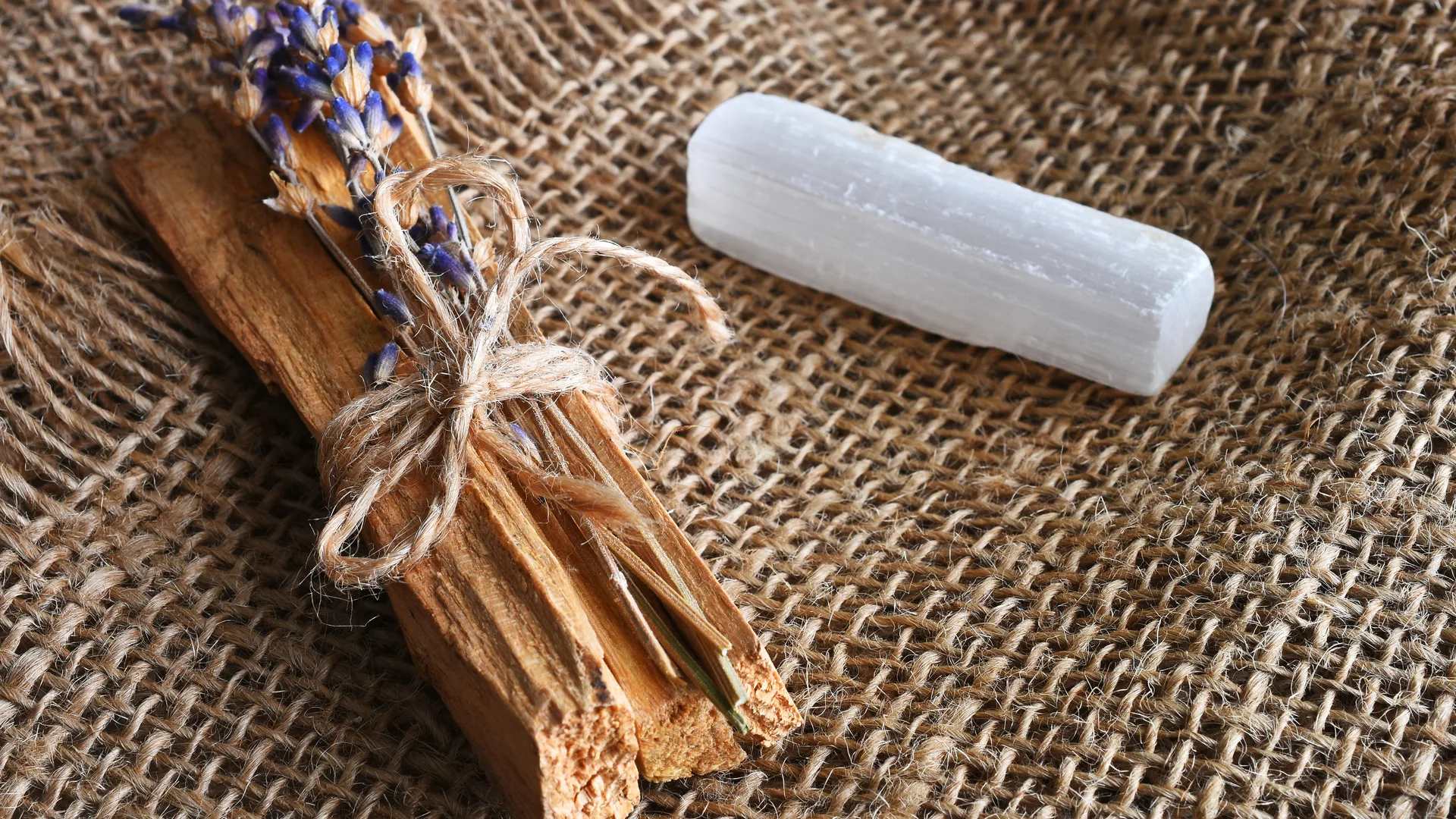

Selenite is a form of gypsum that grows in clear crystals. The pale reflections on its flat faces inspired its name, which comes from the Greek word for moon.
Our guide to selenite’s crystal meaning covers its history and what it stands for in crystal practice.
As with any other crystal, the best time to cleanse selenite is when you bring it home from the store, after it has been exposed to heavy feelings, or when you want to recharge it with fresh energy.
When cleansing, the main thing to keep in mind is to choose a form of cleansing that involves no water.
Rinses, salt water, and bowls of moon water will damage the surface. Not immediately, but the longer the crystal stays in water, the more of its surface dissolves.
If it’s dust you want to remove, a soft, dry cloth is enough for a smooth piece.
How to Cleanse Selenite with Sound
In crystal practice, cleansing is a spiritual ritual for clearing energy and starting fresh. Sound is a good choice for selenite because the piece can stay dry and you can leave it right where it is.
- Set the selenite on a steady, dry surface. If it’s a wand that rolls, lay it flat on a folded cloth away from the edge. If it already sits securely on a shelf, leave it there.
- Decide what you want to clear. Think about why you picked up this piece today. You can put that into words or keep it to yourself. Alternatively, if you just want to recharge it with its natural energy, you don’t need to say or think anything at all.
- Play the sound beside it. Depending on what you have at home, or what you’re comfortable with, you can ring a bell, play a singing bowl, or play a recording of a cleansing sound. If you want to learn more about this method, we’ve also written an extensive guide to sound cleansing.
- A few minutes is enough. You can finish the cleanse in only a few minutes. Our free Crystal Cleanse app, on the web and on mobile, has preset sessions of 3, 5 and 10 minutes. Choose what feels right for you at the moment.
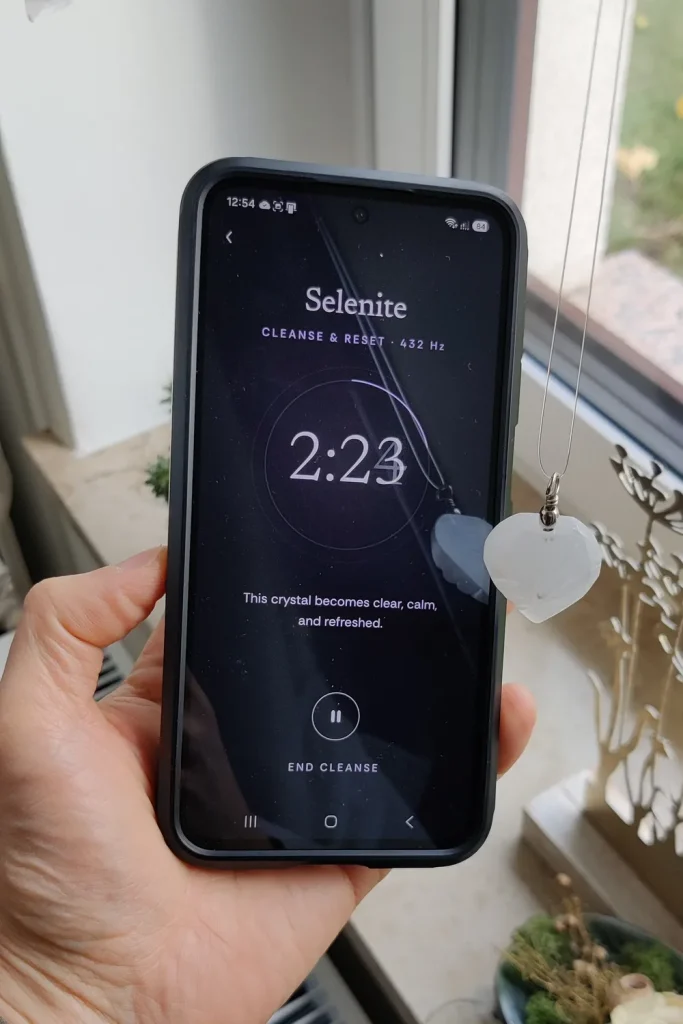
Smoke is dry as well, so sage or incense is another option. Our guide to cleansing crystals with sage, incense or smoke shows how to do it safely.
Can You Cleanse Selenite in Moonlight?
Yes. If you prefer moonlight, set the selenite on a dry surface indoors near a window. Check the sill first. If the glass fogs up and water collects along the bottom, use a table a little farther back. Outdoors, a clear evening can still leave the piece wet with dew by morning, so unless you live in a dry area, we don’t recommend cleansing selenite outdoors.
Why Selenite Needs to Stay Dry
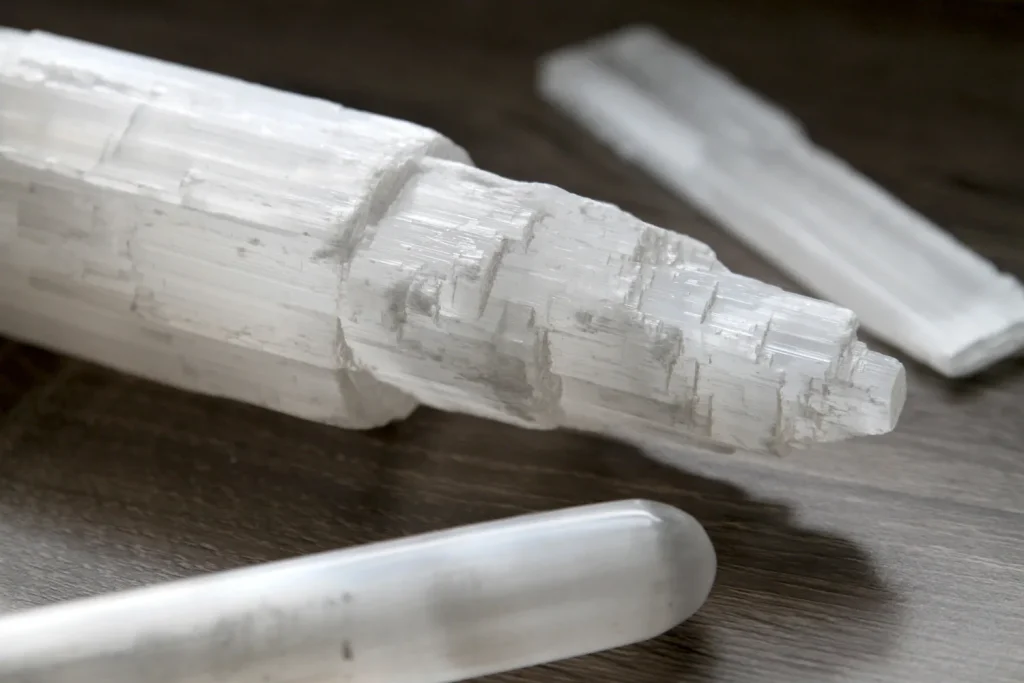
While most white crystal towers and wands sold in shops are labeled as “selenite,” they are almost always satin spar – a closely related, fibrous variety of the same mineral, gypsum. Both share the exact same chemical makeup and delicate softness, so neither is a “fake,” though they look quite different in their natural forms. True selenite forms in clear, glass-like, flat sheets that you can see right through, whereas satin spar grows in dense, parallel fibers that give it an opaque, milky-white appearance with a silky sheen. In the crystal trade, “selenite” has simply become a convenient umbrella term for both, largely because fibrous satin spar is much easier to carve and polish into popular shapes like spheres, bowls, and wands.
Water can dissolve gypsum at the surface of either piece. The National Park Service’s mineral care guidance advises against washing gypsum.
Gypsum is also soft, and selenite can split into thin sheets along flat planes inside the crystal. Mineralogists call that cleavage. It’s why you want to handle an exposed edge gently, even when the piece is dry. See the USGS description of selenite and satin spar.
How to Dust Selenite
On a smooth wand, tower, or plate, remove the loose dust with a clean, dry microfiber cloth and a light touch. If the piece already has loose layers or fibers, leave those areas alone so the cloth doesn’t catch. If you have a small air blower, you can also use it to blow the dust off those areas. For an example of how we dust a piece at home, see our guide to crystals that can’t get wet.
What to Do If Selenite Gets Wet
- If it’s already soaking, take it out right away. Support the piece if it’s large or thin.
- Blot droplets from smooth areas with a soft, dry cloth. Just “tap” the crystal to avoid rubbing the surface. Leave any loose layers or fibers to air-dry.
- Let it air-dry at room temperature. Rest it on a dry cloth, away from radiators and hairdryers, because heat can crack it. Give the underside room to dry too.
Any gypsum that dissolved is already gone. Once the piece is dry, look at the surface in good light for signs of water damage, such as a dull or chalky patch where it used to be smooth. If the piece matters to you, a lapidary can tell you whether a dulled surface can be re-polished.
Is Selenite Self-Cleansing?
In crystal practice, selenite is often treated as self-cleansing, so some practitioners say it doesn’t need to be cleansed. However, Darija Huzimec, our crystal advisor, still recommends using sound or moonlight when you bring a piece home or want to mark a fresh start.
Can Selenite Cleanse or Charge Other Crystals?
If you’re using a charging plate or tray made of selenite, gently place your smaller stones on top with a little space between them. Always ensure any stones you have recently washed are completely dry first. When the cleansing is complete, lift each piece straight up off the plate rather than dragging it across the surface, as harder stones can easily scratch the soft gypsum. For larger statement pieces, heavy crystals, or raw specimens with sharp points, simply lay them directly beside your selenite piece on a flat surface.
* AI was used to assist in the preparation of this article.