
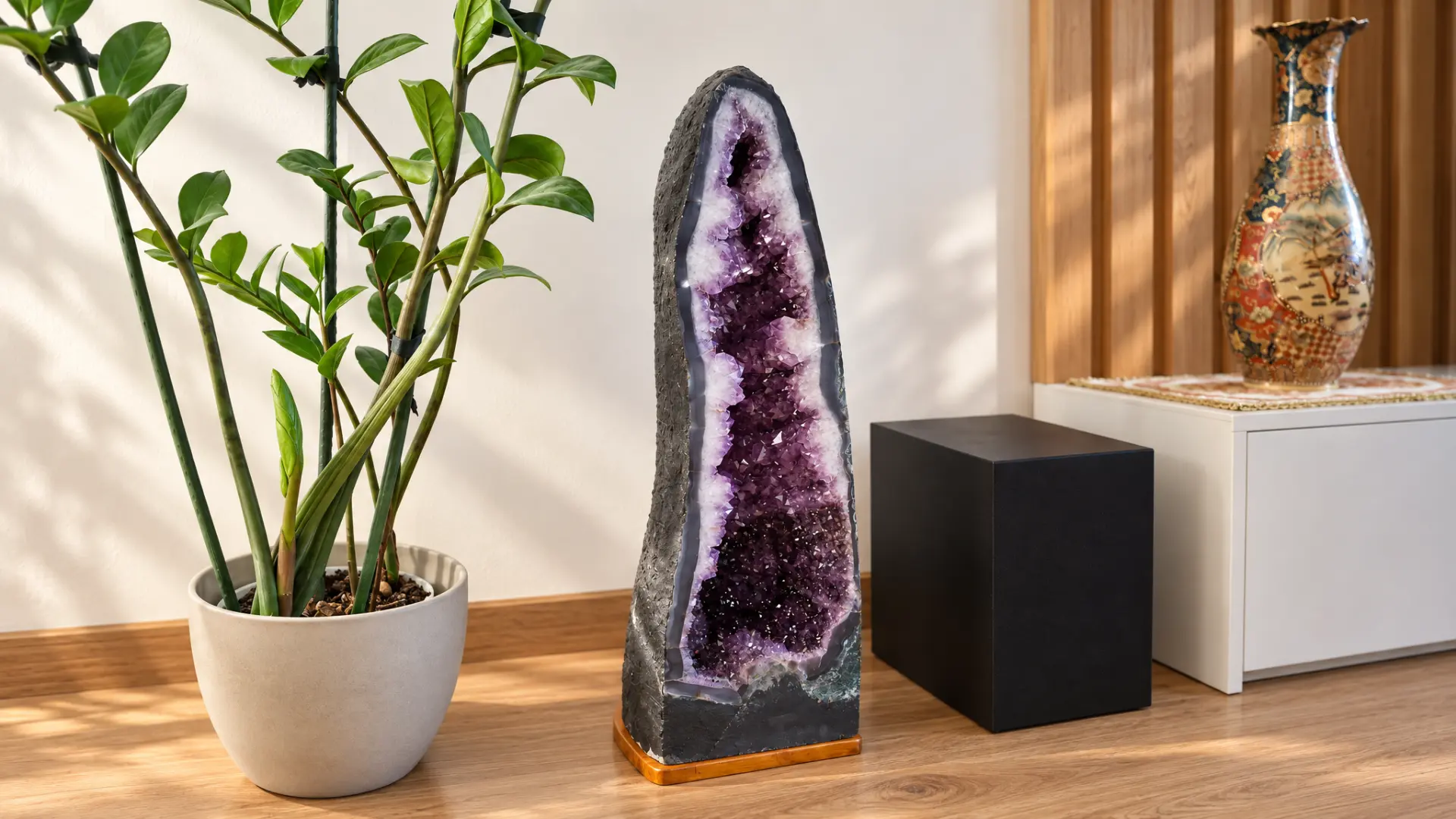

Amethyst, in its essence, is quartz. It is hard, it is chemically stable, and it will sit through almost anything a cleansing ritual asks of it – a bell, a bowl, a night of moonlight, a quick rinse, a pass through incense smoke.
However, one method, recommended all too often – and one you may even have used – can slowly fade its color. That method is cleansing in the sun.
In crystal practice, it is believed that cleansing clears away “negative” energy and resets the crystal to its natural frequency or charges it with a fresh intention. There are many ways to cleanse a crystal, but not all are suitable for every crystal. For amethyst, the sun is its biggest enemy.
This guide is specifically about cleansing your amethyst without destroying the color you paid for.
Which Methods Suit Amethyst
| Method | Amethyst | What to watch |
|---|---|---|
| Sound | Yes | With the instrument beside it, nothing touches the stone. The easiest choice for a cluster, a geode, or a piece with parts you cannot inspect. |
| Moonlight | Yes | Moonlight is far weaker than sunlight. You can leave the stone on a dry indoor windowsill, away from morning sun. No need to put it outside. |
| Smoke | Yes | Ash and soot can get trapped between the crystal points. Place a cluster next to the smoke, not directly above the burning ember. |
| Water, brief rinse | Usually | Fine for a loose, untreated polished stone in good condition. Don’t put amethysts with cracks or metal stands under water. |
| Dry salt, indirect | Yes | Stone in one dish, salt in another. Loose salt lodges between points and stays there. |
| Salt water | No | Water can sit in the cavities and leave salt deposits as it dries. Salt water can also corrode metal fittings. |
| Earth burial | No | Grit, moisture, and a real chance of scratching a polished face. |
| Sunlight | No | Prolonged intense light can fade the color, and on this stone the color is the whole point. |
| Intention alone | Yes | Always available, and the answer for a piece too large or too fragile to move. |
Color Damage from Sunlight
Amethyst gets its purple color from traces of iron within its quartz crystal structure, altered by natural radiation.
Strong light can fade the color over time, and GIA’s amethyst care guidance says that some amethyst can fade after prolonged exposure to intense light.
Prolonged is not a very specific timeframe, and the guidance does not give a threshold in hours or weeks. From what I’ve heard from some owners, their amethysts have faded after months in a spot that received a few hours of direct sunlight per day.
A stone living on a sunny windowsill is getting a sun cleanse every sunny day, whether or not anyone decided on one.
Fading is gradual. You may not catch it happening – you notice it on a piece you have not properly looked at in a year.
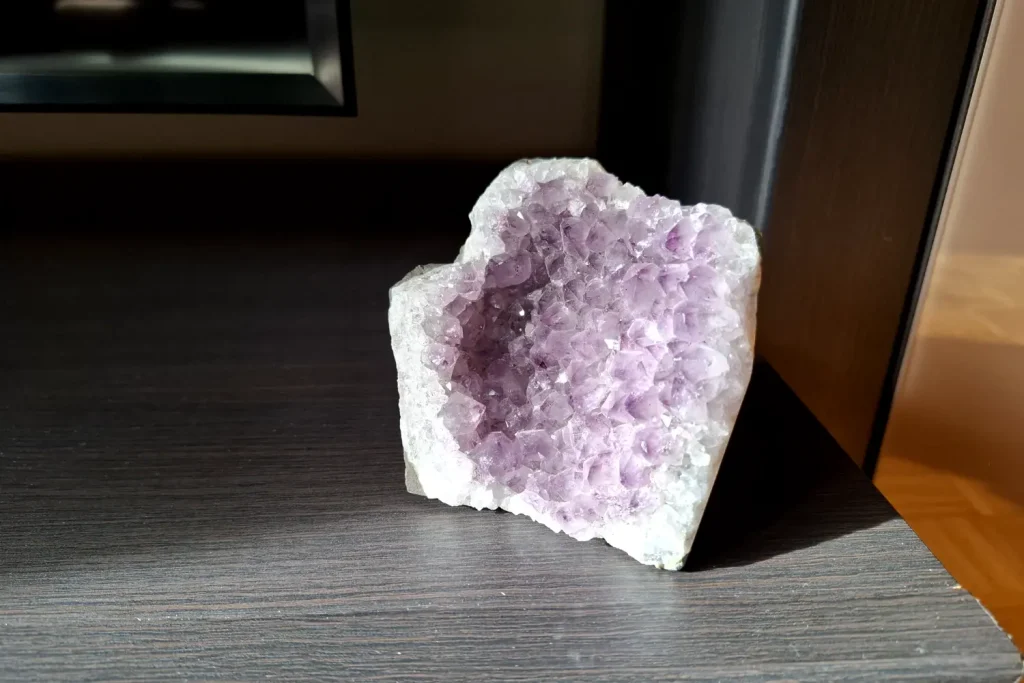
Unfortunately, there’s no reliable home method to bring the color back. If the piece is smaller and less valuable (in pure monetary terms), replacing it may be easy. But if the piece holds sentimental value, or you own a very expensive, large amethyst, replacement is another matter.
Heat Works on the Color Too
There’s an interesting bit of trivia here. Heat can “damage” the purple color, too, but in a way that the gemstone industry has made desirable. Most citrine on the market is amethyst that has been heated until it turns yellow or orange. Same mineral, same stone, a different color on the other side of a kiln.
But this is controlled heat treatment, not something to try at home. Heat can also leave amethyst colorless, and sudden temperature changes can crack it. Let a rinsed stone dry naturally rather than heating it.
Care Rules by Crystal Form
Amethyst arrives in many forms, and the form is just as important as the crystal itself.
A geode, cathedral or cluster. Look at the base. Large display pieces may be cut flat, set into a resin or cement backing, or fixed to a metal stand. That backing and that fixing have their own answer to water, and it is not the quartz’s answer. Water running into the cavity between points can also collect at the bottom, out of sight, instead of draining away.
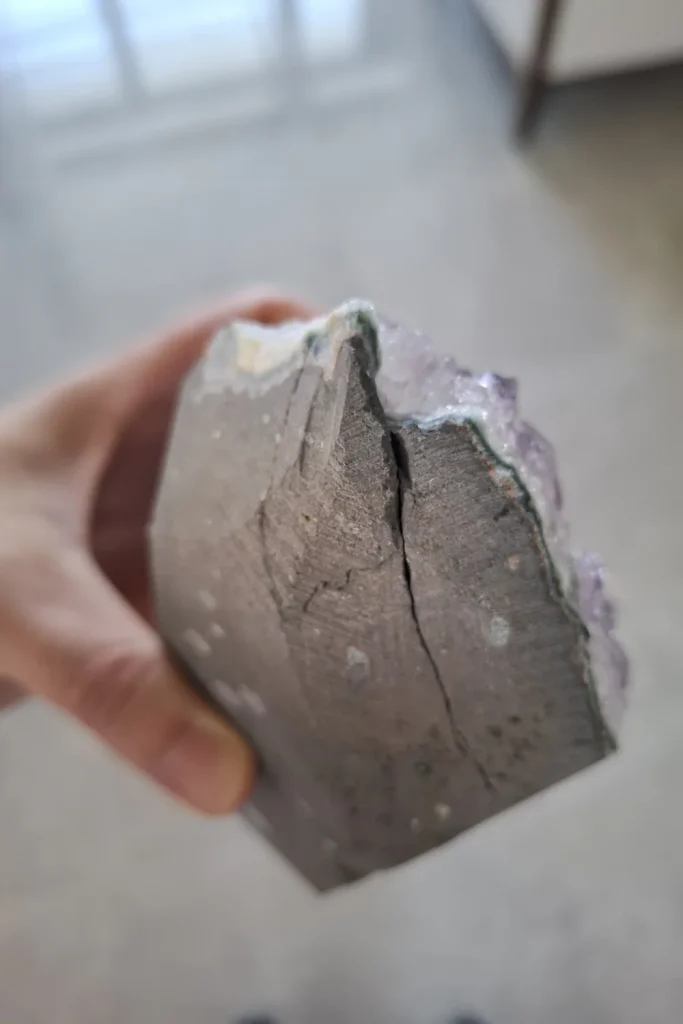
A tumbled or polished stone. This is the simple case.
If the stone is loose and untreated, with no cracks or damage, give it a brief rinse under clean, lukewarm tap water, then dry it properly.
A point, wand or tower. Quartz is hard, which is not the same as tough – hardness, toughness and stability describe different properties. A Mohs 7 point can still chip when it goes over on a hard surface, especially if it lands on the tip. Lay a tall piece down for the ritual rather than standing it up.
Jewelry. Beads, cord, elastic, knots, glue and plating can each behave differently in contact with water. Water can sit inside a drill hole long after the stone seems dry.
A stone you are not certain is amethyst. Dyed quartz and dyed agate both reach the market in convincing purple. Color concentrated in surface pits and cracks can suggest dye, but even or saturated color alone does not prove treatment. If you are unsure, keep it dry until you can confirm what it is.
A Simple Amethyst Cleansing Ritual
1. Check the piece. Look for chips, existing cracks and anything glued. Based on the condition and any treatment of your amethyst, you can then decide which cleansing method to use.
2. Set the intention. Name what you are clearing from the crystal and what you want it to “radiate.” One sentence, aloud or silent. A clear thought does it, too.
3. Cleanse. You can play a guided sound session in Crystal Cleanse, guide the smoke past it, rinse and dry it, or simply sit with it. Stay with the ritual for a few minutes rather than leaving the room.
4. Finish the cleanse. Let the last tone fade, wait for the smoke to clear the stone, or dry your crystal. Then return it to its place, out of direct sunlight.
Three to ten minutes is a useful starting point for a sound or intention ritual. A rinse only needs to be brief; a moonlight ritual can last the evening.
Common Questions
Can Amethyst Go in Water?
Yes, briefly. It is quartz at Mohs 7, and a short rinse in clean, lukewarm water followed by proper drying is suitable for a sound, loose, untreated stone.
A soak is a different act. Overnight in a bowl, a jar of salt water, or moon water on a sill until morning is where the trouble starts – for the cord, the glue, the stand, or the water trapped in the cavity, rather than for the quartz itself. Whether a stone can get wet at all depends on the mineral and on what was done to it before you bought it.
Can I Charge Amethyst in the Full Moon?
Yes. Moonlight is far weaker than sunlight – NIST describes the Moon as roughly 400,000 times fainter than the Sun. If cleansing with the moon, put the stone somewhere dry that rain and dew cannot reach. In fact, you can leave it on an indoor windowsill, so you don’t even have to put it outside. However, if you leave it there all night, move it before direct sunlight reaches it. Otherwise, your amethyst will have a moon cleanse and a sun cleanse in one sitting.
My Amethyst Looks Paler Than It Did
Check where it has been sitting. A windowsill or a spot with several hours of direct sunlight per day adds up to prolonged exposure over time. Move it out of direct sunlight to limit further fading.
How Often Should I Cleanse My Amethyst?
When there is a reason: you’ve just bought a new piece, someone else has handled it, you want to set a new intention, or you’ve reached the end of a difficult stretch. Once a month is a steady rhythm if you would rather not decide each time.
* AI was used to assist in the preparation of this article and in the editing of some of its images.