
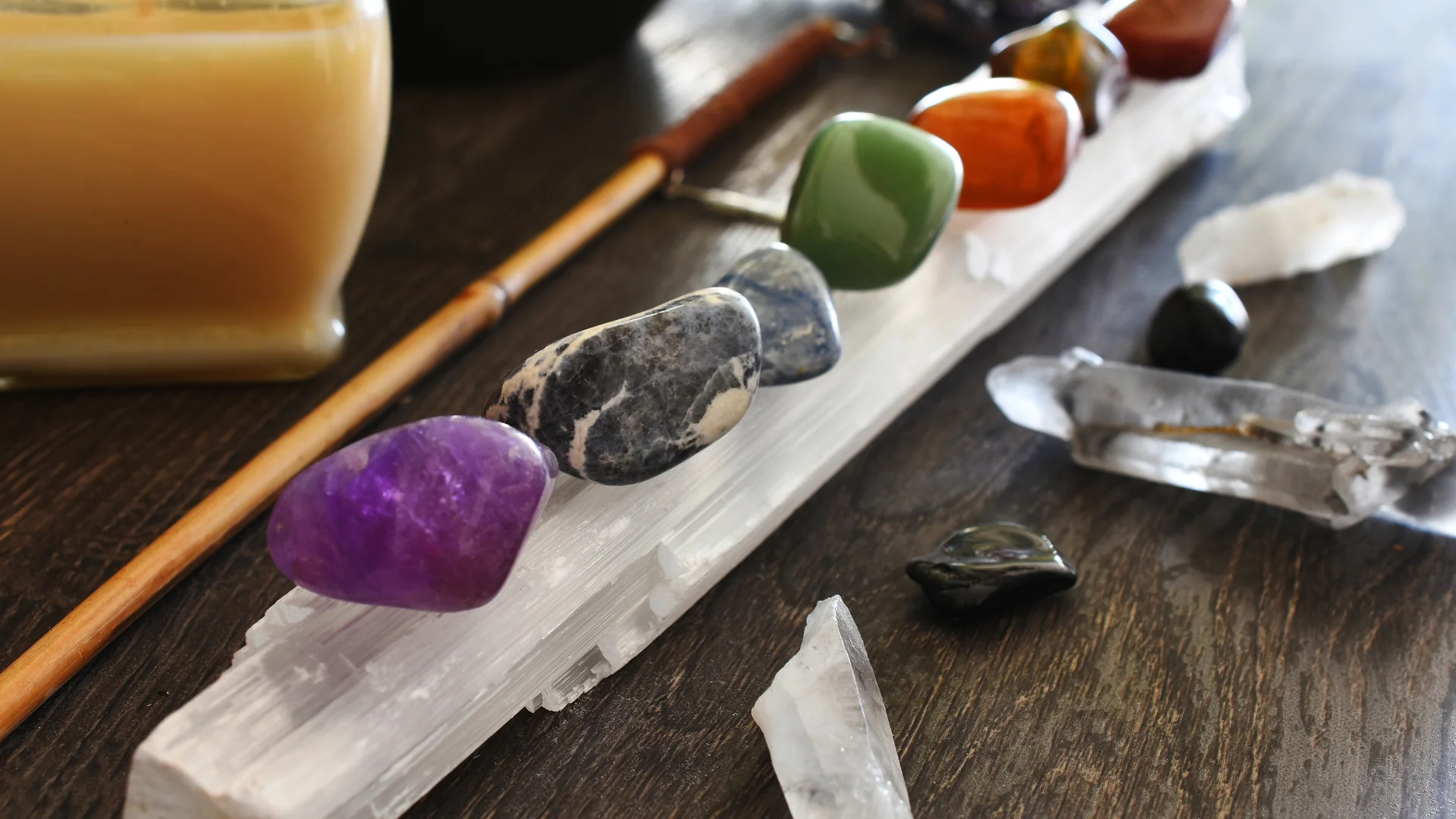

To charge a crystal safely, choose a method that suits the stone’s material and give it a clear intention. You may wonder why the mineral matters for charging. That’s a fair question.
Sound, a selenite plate or clear quartz cluster, and dry indoor moonlight are safe for almost every crystal. Direct sunlight and burying stones in soil are where real damage happens – faded color, scratched polish, or moisture damage on softer minerals.
In crystal practice, cleansing clears what a stone has picked up, and charging gives it fresh direction for what you want to use it for next. Luckily, you don’t need to wait for a full moon or put your collection out in the midday sun to do it.
6 Charging Methods at a Glance
Start from what your crystal can physically handle. If you’re not sure what a stone is – or it’s strung on elastic cord, glued to a stand, or set in metal – stick to the top four methods.
| Method | Material risk | Best for |
|---|---|---|
| Holding the stone with intention | None | Any stone, jewelry, or quick daily reset |
| Sound | None | Fragile stones, mixed collections, and cleansing plus charging in one session |
| Selenite or clear quartz | Scratching | Everyday stones you want to rest overnight on a shelf or nightstand |
| Moonlight | Moisture, falls | Monthly rituals and overnight charging on a dry indoor sill |
| Sunlight | Fading, heat | Durable, light-resistant stones for brief morning sun only |
| Earth (soil) | Moisture, grit | Durable, water-safe stones (or any stone on a dry cloth above soil) |
When to Cleanse Before You Charge
A useful rule of thumb: cleanse first whenever the stone:
- is new to you,
- has been handled by someone else,
- has sat unused for a long stretch, or
- was with you through a heavy period.
Charging without cleansing first is a bit like writing a new note over an old one – in crystal tradition, clearing the stone first gives the new intention a clean slate.
You don’t need to cleanse before every single charge. If you already cleansed a crystal recently and simply want to refresh the same intention – for example, holding your pocket stone for a moment before leaving the house – you can go straight to charging.
Some methods, especially sound and full-moon moonlight, let you cleanse and charge in the same sitting. If you need a separate cleansing step first, our guide to cleansing crystals walks through nine methods matched to the stone in your hand.
6 Ways to Charge Your Crystals
The methods below are ordered from the safest and easiest to the ones that ask the most of the mineral. Pick one that fits both your crystal and your routine.
1. Holding the Stone With Intention: The Simplest Method for Any Crystal
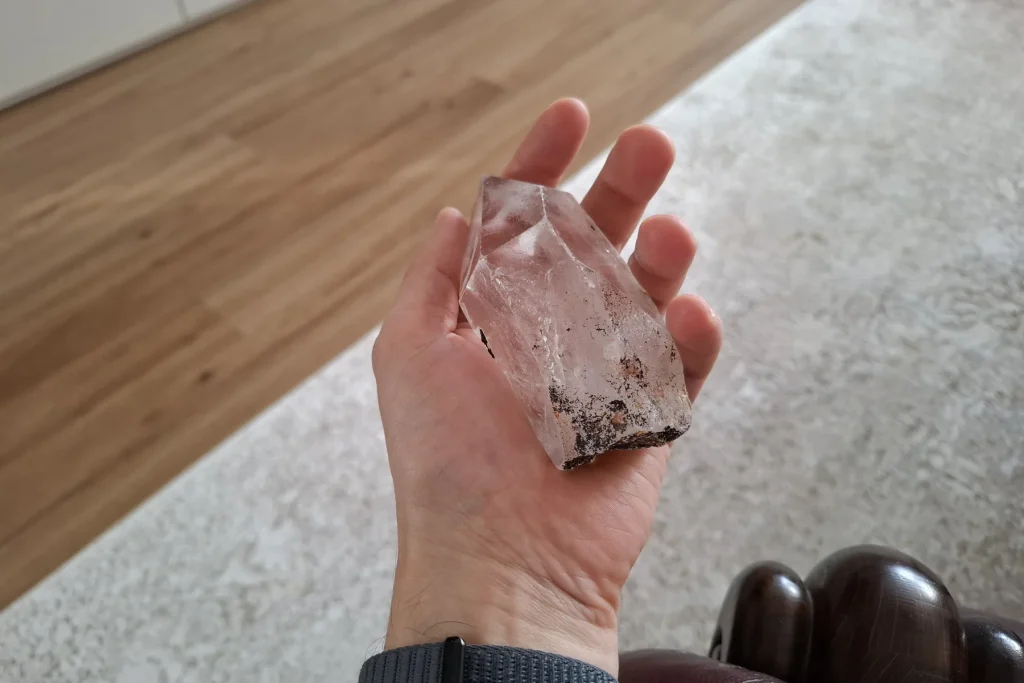
Every charging method uses intention – deciding what you want the crystal to remind you of or how you want it to support you. The simplest way to do it requires no tools at all: you just hold the stone and give it a clear purpose. Because nothing touches the mineral except your hands, it carries zero physical risk for raw clusters, delicate specimens, bracelets, or pocket stones. Here’s how to do it:
- Hold the crystal comfortably in your hand, or rest your hands near a piece that is too large to lift.
- Take a couple of slow breaths so you’re not rushing through it.
- State what you want the crystal to hold for you – out loud or silently. Keep it plain and specific, such as “a calm end to the evening” or “steady focus at my desk.”
- Pause for a few seconds with that thought, then set the stone back down.
One clear sentence is enough. You don’t need a script or a long meditation. Do the same when you want to change your intention or shift your focus.
2. Sound: Cleanse and Charge One Stone or a Whole Collection
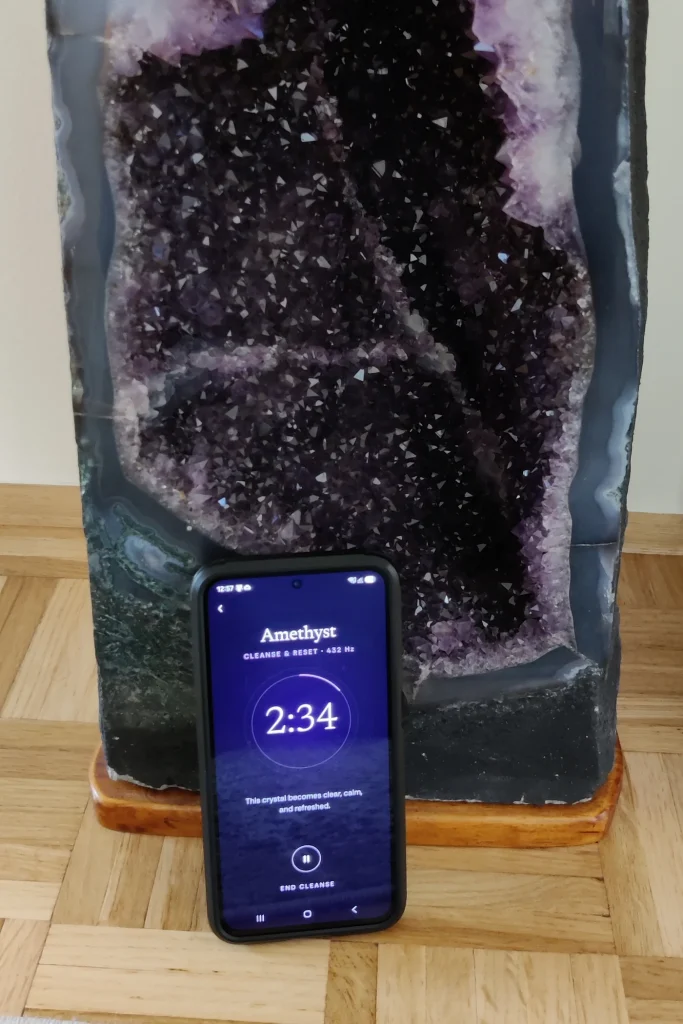
Sound lets you cleanse and charge a single stone or a whole tray of crystals without touching water, smoke, or sunlight. Sound (at levels we can produce at home) cannot damage your stones in any way. It’s safe for all crystals under the sun.
Use this method:
- Place your crystals on a steady table or cloth, with a little space between them so they don’t knock together.
- Play a singing bowl, strike a tuning fork, or use a clean audio recording at a comfortable room volume.
- While the sound plays, hold your intention in mind for a few minutes.
If you don’t own a bowl or tuning fork, you can use our app, Crystal Cleanse. There’s a web and an Android version available, for free.
The included sessions let you cleanse and reset a crystal – or cleanse it and charge it with one of six intentions.
If you’d like to use a physical instrument and learn how frequencies fit into the practice, see our guide to sound cleansing.
3. Selenite or Clear Quartz: Passive Charging (Watch Out for Scratches)
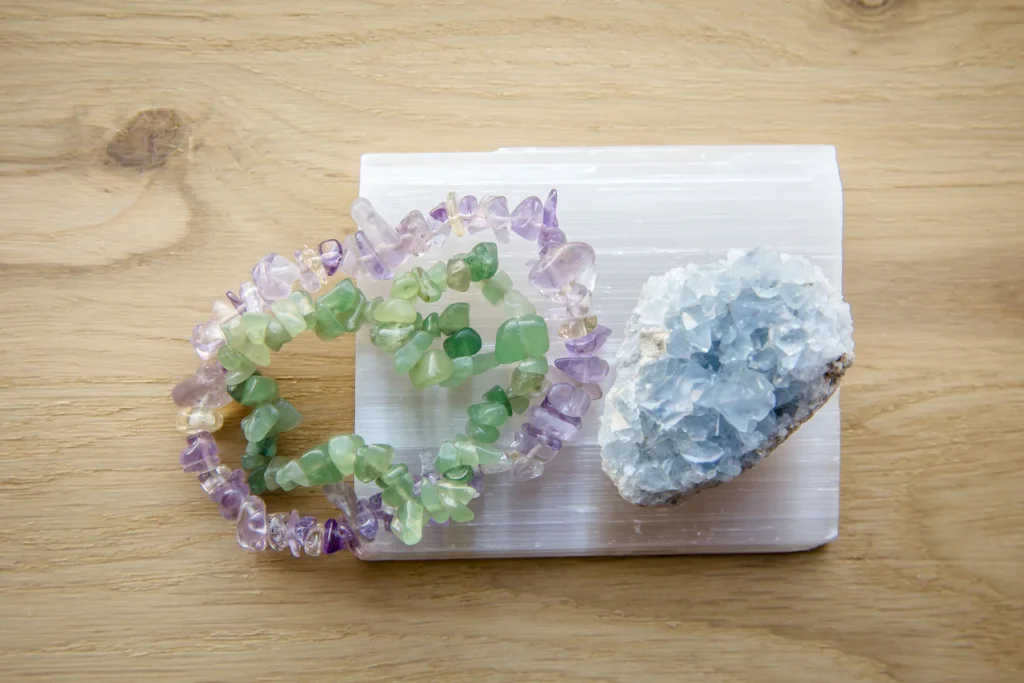
In crystal tradition, selenite plates, wands, and clear quartz clusters are used as charging bases. You simply rest smaller stones on or beside them for a few hours or overnight.
There is one practical catch most charging lists skip: hardness. What is sold as selenite is gypsum, which sits at 2 on the Mohs hardness scale – soft enough to scratch with a fingernail. Quartz, including amethyst and rose quartz, sits at 7. If you drag a sharp quartz point across a polished selenite plate, it will leave white gouges.
Here’s how to charge your crystals safely:
- Set stones down rather than sliding them. Lift a stone straight up when you take it off a selenite plate.
- Give raw edges a small buffer. For heavy or rough-bottomed crystals, set them beside a selenite wand instead of on top of it.
- Keep selenite dry. Never pair a selenite base with damp stones or a humid bathroom shelf; our selenite care guide explains why water damages it.
4. Moonlight: Safe Light, as Long as the Stone Stays Dry
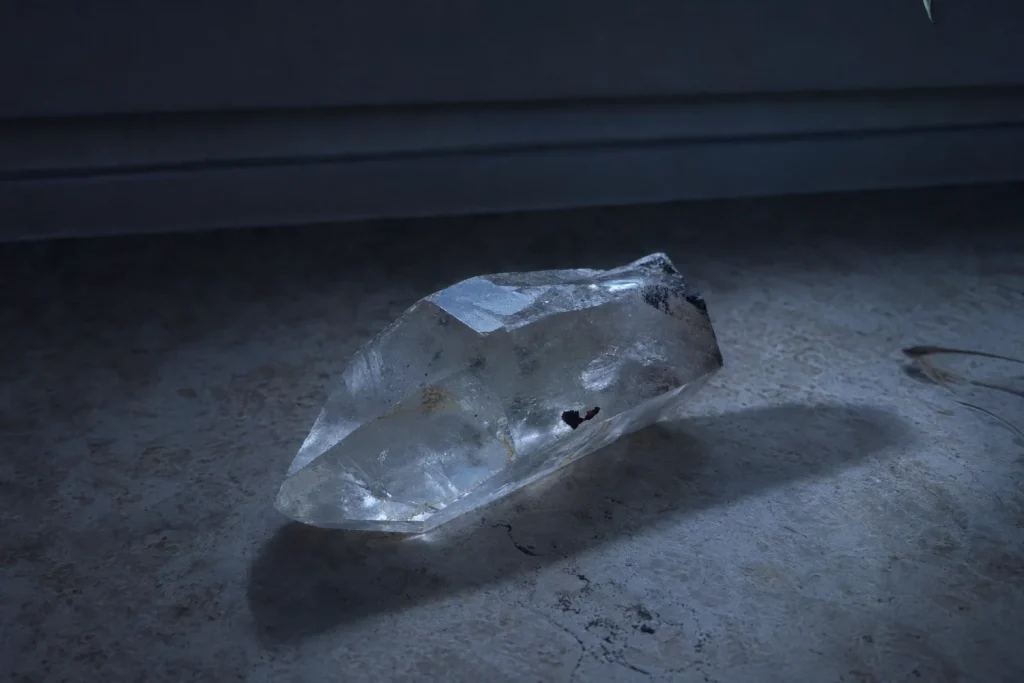
Moonlight is the best-known charging method, especially around the full moon. The light itself is far too faint to fade any crystal – NIST notes that moonlight is roughly 400,000 times fainter than sunlight.
The real risks are practical ones: dew or rain outdoors, condensation on a cold window, a narrow sill a stone can roll off, and direct morning sun if you leave light-sensitive crystals on the sill after sunrise. Short-term exposure won’t damage your amethyst, for example, but if you leave it on a sunlit windowsill, a few months of exposure can fade its purple color.
Keep valuable or water-sensitive pieces indoors on a dry cloth or dish, and bring them back to their usual spot in the morning.
Any clear night works, though most people choose the full moon because it gives them one obvious date a month. For exact timing, window direction, and the overnight safety checklist, follow our full-moon charging guide.
5. Sunlight: Brief Morning Sun Only, and Not for Every Stone
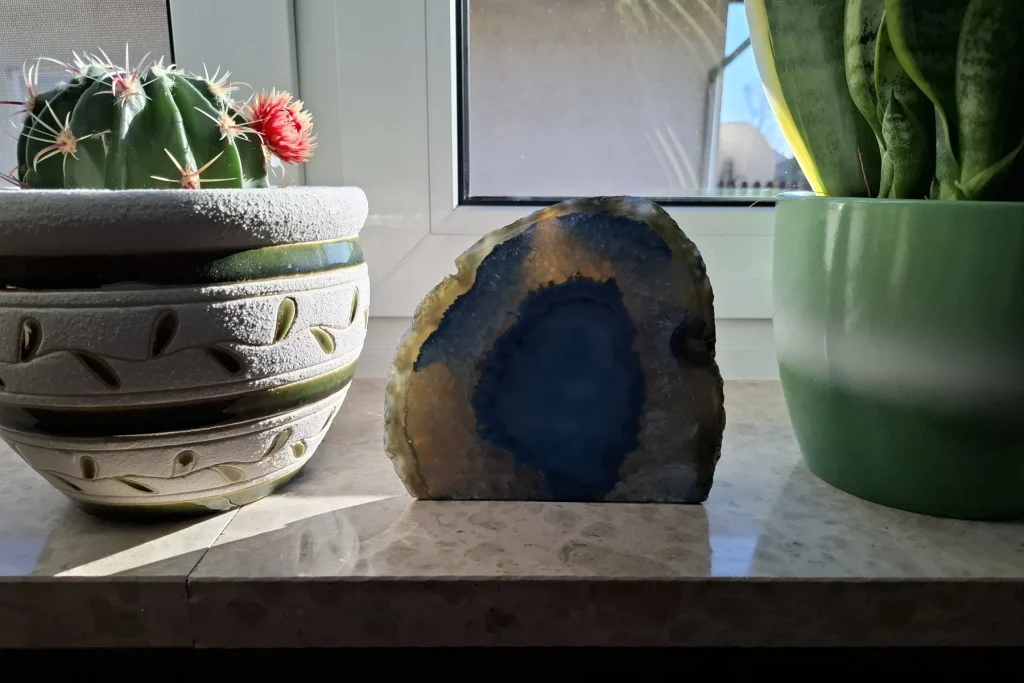
Sunlight is traditionally associated with bright, active energy, and a short spell of morning sun is fine for durable, light-stable stones such as clear quartz, black tourmaline, or carnelian.
It isn’t a universal method. Gemological guidance from the GIA notes that prolonged exposure to intense light and heat can cause certain colored gemstones to fade, including amethyst, citrine, and kunzite. Fluorite, celestite, and some rose quartz can also lose color under strong UV light, and abrupt temperature changes on a hot windowsill can stress fractured stones (the GIA’s gem durability overview explains how light and heat sit alongside hardness in stone care).
If you want to charge a crystal with sunlight:
- Check the stone first. Skip direct sun for amethyst, citrine, rose quartz, fluorite, celestite, kunzite, smoky quartz, and dyed or resin-coated pieces.
- Keep it brief. Thirty minutes to an hour of mild morning sun is plenty; don’t leave stones baking on a south-facing sill all afternoon.
- Skip spheres and lenses in direct sun. A clear quartz sphere or polished lens-shaped crystal on a sunny windowsill can focus sunlight like a magnifying glass onto wood or fabric. That’s something you definitely don’t want.
6. Earth and Soil: Grounding Without Soaking or Scratching Your Stone
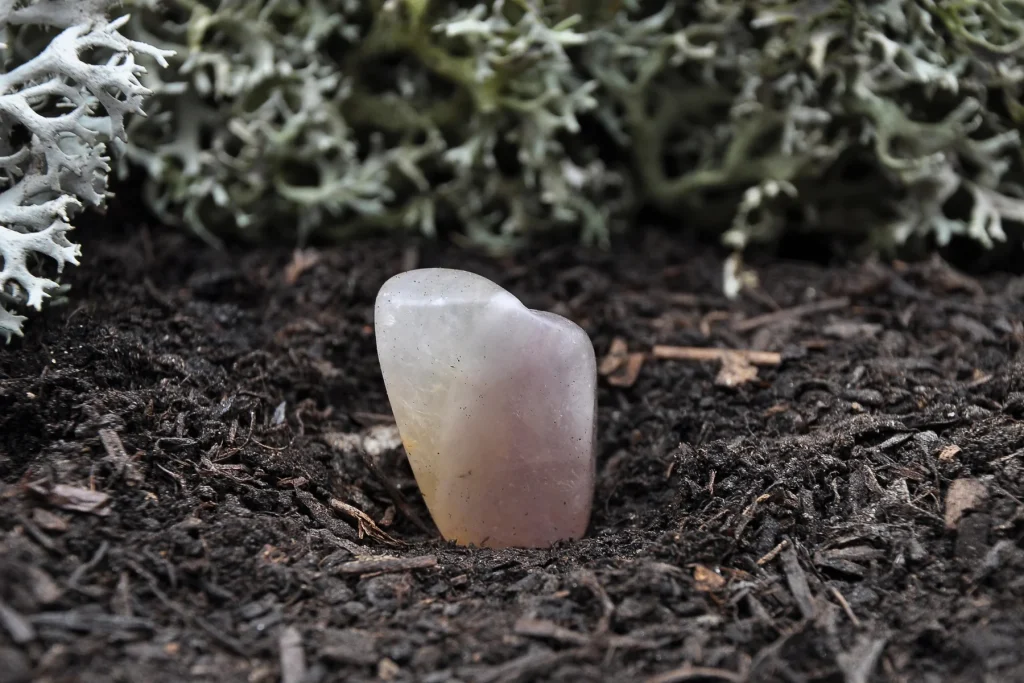
Burying a crystal in garden soil or a potted plant is a traditional grounding method, returning the stone to the earth for 24 hours.
From a care standpoint, damp soil combines two things many minerals dislike: prolonged moisture and abrasive grit. Water-soluble or porous stones – selenite, malachite, lepidolite, halite, and raw turquoise – should never be buried. Even for tougher stones like quartz or jasper, soil works its way into natural cracks and rough matrix, and metal settings or glue won’t thank you for a night in wet dirt.
If you like the grounding feel of earth without the cleanup or risk:
- Wrap durable stones in natural cloth. A clean cotton or linen pouch keeps grit out of crevices and makes the stone easier to find again.
- Or rest the crystal on top of the soil. Setting a stone on a dry dish or folded cloth next to a potted plant – or directly on dry garden stone – gives you the same outdoor connection without soaking or scratching it.
Check which crystals can’t get wet before putting any stone into damp soil.
How to Pick a Method You’ll Actually Use
You don’t need a different charging ritual for every crystal you own. Choose one that feels right for you. That’s it. You don’t need to switch up the methods if you don’t want to. All of them work just as well.
Personally, I stick to cleansing and charging with sound, especially with our mobile app (because I couldn’t find a good one, I developed it myself). Darija, our crystal advisor, mostly uses smoke because she likes the smell (which I also like, though in all honesty I don’t want it trapped in the fabrics). Another favorite of hers is sound with Tibetan bowls. She already has them for her workshops, and doing something that physical and deliberate feels good.
If you want a simple starting rule:
- For an unknown stone, jewelry, or a mixed tray: use intention, sound, or dry indoor moonlight.
- For a stone you pick up every day: keep a selenite plate or clear quartz cluster on your desk or nightstand so charging happens while it rests.
- For a fresh start after a busy month: pair a sound cleanse or full-moon night with one clear sentence of intention.
Common Questions
How Long Should You Charge Crystals?
It depends on the method. Charging with intention or sound takes two to five minutes. Resting a stone on selenite or clear quartz usually runs for a few hours or overnight, and moonlight is typically an evening or overnight. For sunlight, shorter is safer – 30 to 60 minutes of gentle morning sun rather than a full day. In the end, it all comes down to personal preference, experience, and beliefs.
How Often Should You Recharge Crystals?
Whenever a stone starts to feel flat to you, or whenever you want to shift its purpose. Tying it to the monthly full moon works well if you like a predictable habit; for a bracelet or pocket stone you carry every day, a brief intention refresh once a week works well.
Can You Charge Multiple Crystals at Once?
Yes. Sound, moonlight, and intention all work on a group of stones at the same time. Just leave a little space between pieces so harder minerals don’t chip or scratch softer ones when you set them down or pick them up.
Do You Have to Charge Crystals After Cleansing?
No. Cleansing on its own is complete if you simply want the crystal reset and sitting quietly in your room. Charging is the step you add when you want to pair the stone with a specific intention or use.
Can You Charge Crystals Through a Window?
Yes, for moonlight – placing crystals on a dry cloth or dish, a little back from the glass so cold-window condensation doesn’t reach them, is the standard way to keep them safe overnight. For sunlight, keep in mind that ordinary window glass blocks UVB, but UVA and heat still get through, so a sunny sill can still fade light-sensitive stones over time.
* AI was used to assist in the preparation of this article and in the editing of some of its images.