
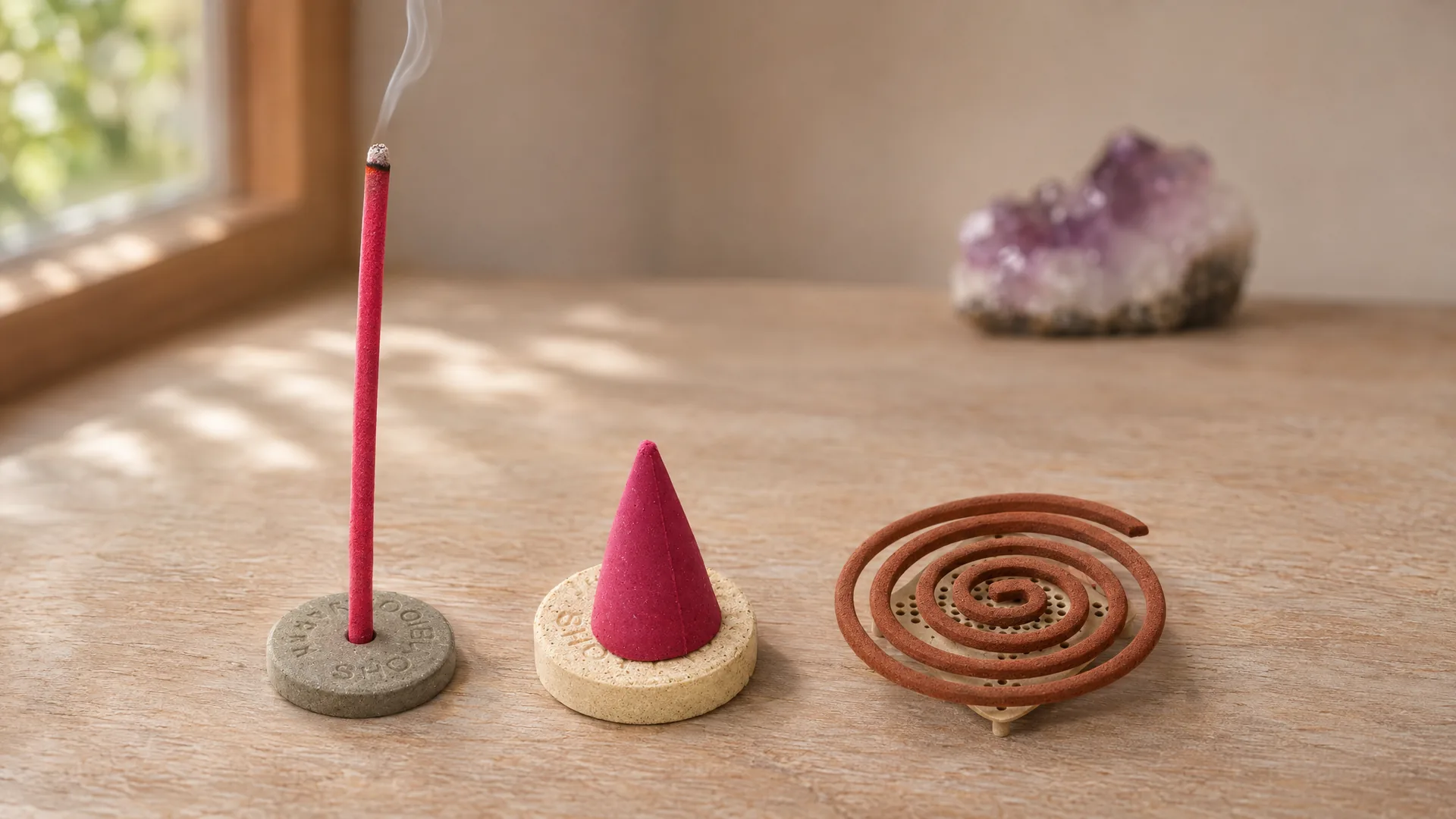

Find an incense scent you like, and there’s a good chance it comes in more than one shape: a long box of sticks, a small bag of cones, maybe a box of flat spirals. The label is the same and the price is close, so what are you actually choosing between?
Mostly a shape. All three are the same kind of thing: a paste of fragrant wood, resin, herbs and a binder, shaped so that it smolders slowly once you light it. The shape is what changes, and the shape decides how long it burns, how concentrated the scent is, and what you need to put it in.
If you only want the quick version, here it is:
- A stick burns steadily for about 25 minutes or more and is the easiest to hold safely. Start here if you are unsure.
- A cone gives the same kind of scent in a shorter, stronger burst. It suits a small room and a short ritual.
- A coil burns for hours. It is made for scenting a large space or an outdoor area over an afternoon; for a short ritual, put it out when you’re done.
Sticks, Cones and Coils Compared
| Stick | Cone | Coil | |
|---|---|---|---|
| Typical burn time | About 25 minutes for a regular stick, 45 to 55 for a long one | About 10 minutes | About 2 hours |
| Scent | Steady and spread out | Stronger while it lasts | Steady, over a long time |
| Holder | A stick holder or ash catcher | A heatproof dish, or a bed of sand | A hanging stand or a coil holder |
| Best for | Most rooms, most rituals, beginners | Small rooms, short sessions | Large or outdoor spaces, long sessions |
| Watch for | Ash falling beyond a short holder | The base stays hot after it looks spent | Far longer than a short ritual needs |
The stick, cone and coil times are the approximate figures in Nippon Kodo’s beginner’s guide to incense; other makers’ products run longer or shorter. Thickness, ingredients and how tightly the paste was pressed all change the burn, so the time printed on the box is the figure to trust.
Incense Sticks
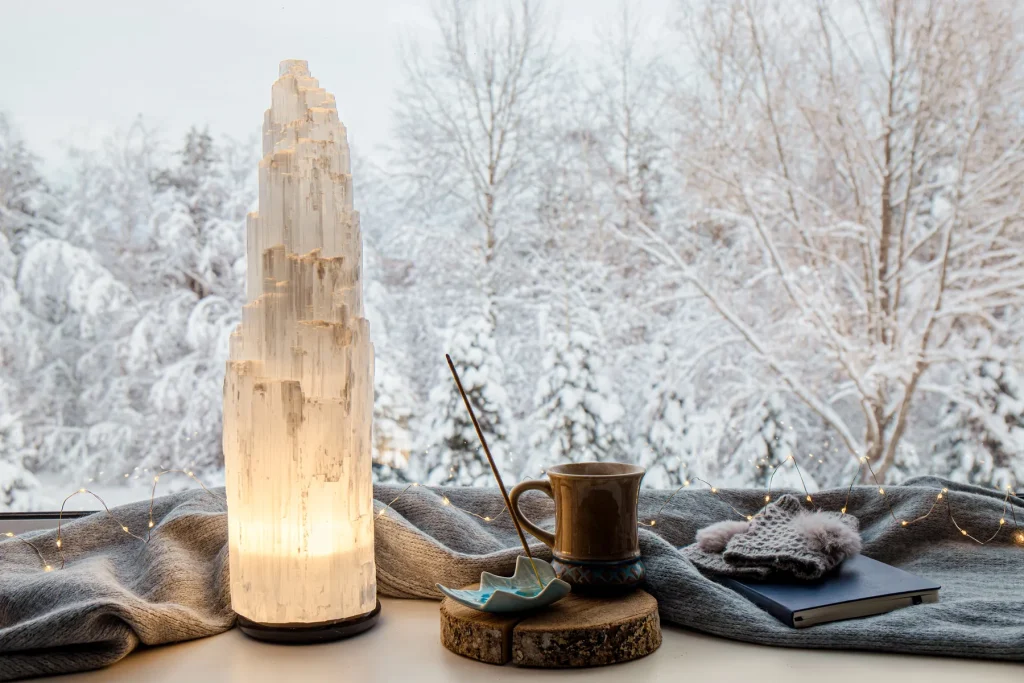
Incense sticks are the most familiar format. They sit upright or at an angle in a holder, burn from the tip down, and leave ash in a narrow line.
There are two kinds, and the box doesn’t always make the difference obvious:
- Cored sticks are rolled around a thin bamboo splint. Most Indian incense (agarbatti) is made this way. The bamboo makes the stick sturdy and leaves a bare stub at the end, which goes into the holder. Nippon Kodo notes that bamboo incense also tends to give off more smoke and to be longer.
- Coreless sticks are pressed paste all the way through. Traditional Japanese incense is made this way. With no splint inside, the stick is more fragile, but you can snap it and burn only part of it when you want a shorter session.
A cored stick needs a holder with a small hole or a slot for the stub. A coreless stick can go in the same kind of holder, or stand upright in a small bowl of sand or ash. Either way, pick a holder at least as long as the stick, or put a heatproof plate under it: ash from a long stick that overhangs its holder ends up on the table.
Incense Cones
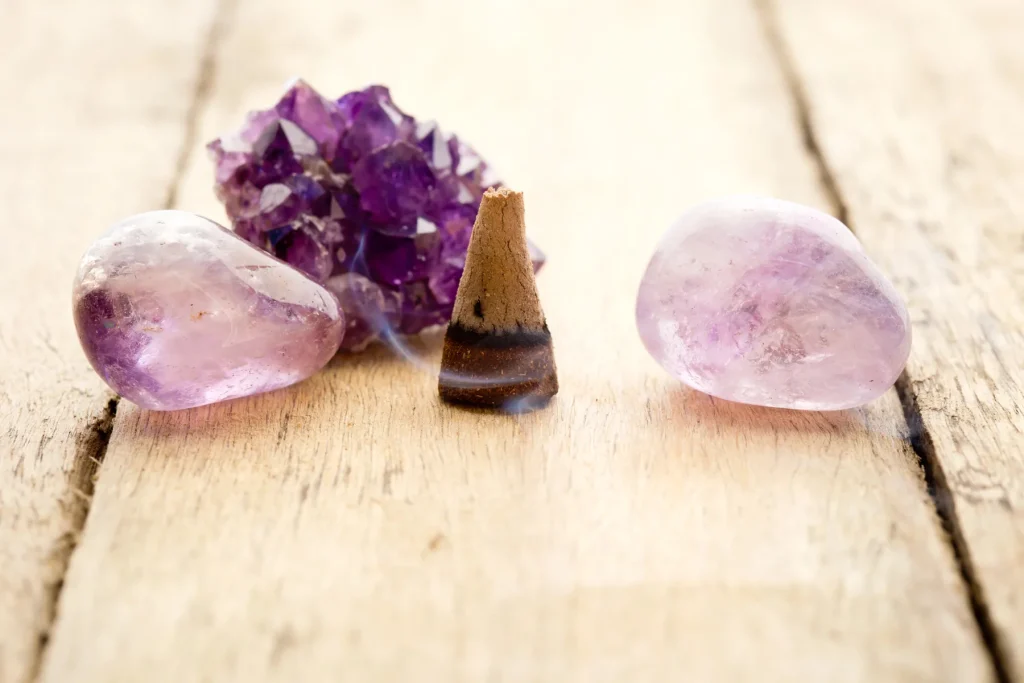
A cone is the same paste pressed into a small pyramid. You light the tip, let it flame for a moment, blow the flame out, and it smolders down toward the base.
Because the shape is compact, a cone burns faster and releases its scent in a more concentrated burst. Nippon Kodo, the Japanese incense maker, sums up a cone as burning quickly and strongly, and points out that its ash doesn’t scatter. That makes a cone a good fit for a small room, or for a ritual that should be over in a few minutes.
The trade-off is heat. A burning cone concentrates heat right at its base, and the last bit can keep glowing even after it looks finished. Put it on a heatproof dish made for cones, or on a layer of sand, never straight onto wood or a plastic tray.
Backflow Cones
A backflow cone has a hollow channel running up through its middle. You set it over a small hole in a backflow burner, and instead of rising, the smoke flows down through the channel, out through the hole, and pours over the burner’s shape like a slow waterfall.
The effect is mostly visual. It needs a backflow burner, a still room (a draft or a fan breaks the stream up), and a cone made for backflow; an ordinary cone on a backflow burner just smokes upward. If you like watching the smoke, it is a pleasure to look at. If you are choosing for scent alone, a regular cone does the same job.
Incense Coils
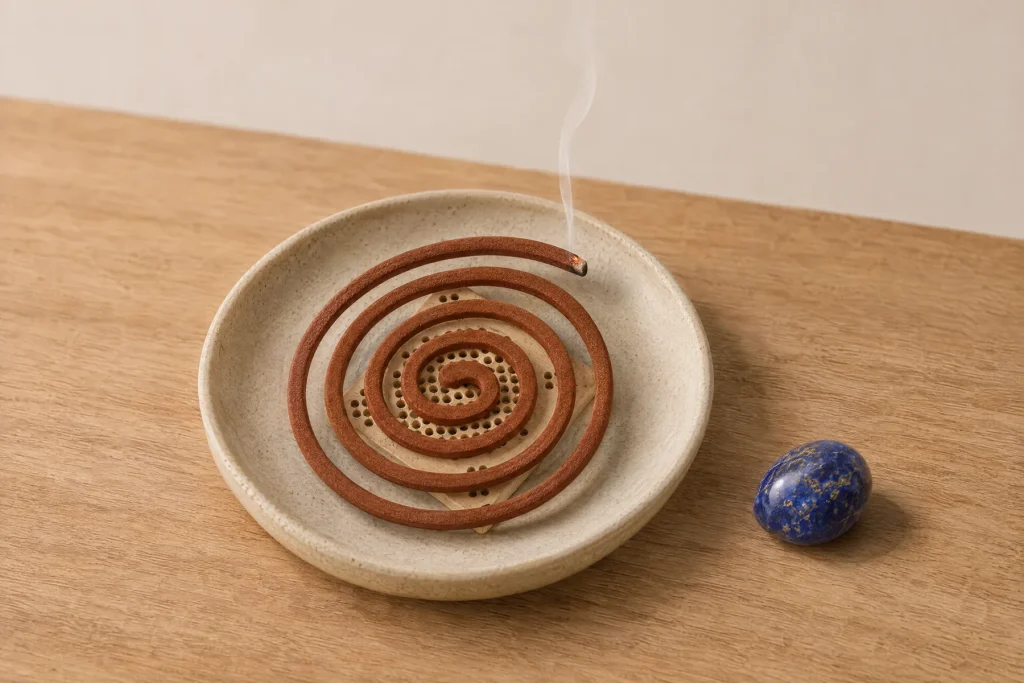
A coil is a long, thin strand of incense wound into a flat spiral. You rest it on a coil holder or a bed of ash, or hang it from its center on a small stand, and light the outer end. Because the strand is so long, a home coil burns for about two hours, and large coils last longer still.
That long burn is the point. Nippon Kodo recommends coils for large spaces and rooms with plenty of air flow, and a coil also suits a porch or a garden over an afternoon. For a short ritual it burns far longer than you need, so put it out when you’re done, or break a coreless coil into a shorter piece.
One thing to check when you buy: a mosquito coil looks almost identical but is a different product. Most modern mosquito coils contain a pyrethroid insecticide or a plant repellent such as citronella, as this overview in The Conversation explains. They are made to keep insects away, not to scent a room, so read the box before you buy coils as incense.
Which Format Is Best for Cleansing Crystals?
Any of the three works. The ritual is the same whatever the shape, so choose the one you like and the burn time that suits you. A stick is the easiest place to start: its holder controls the ember and catches the ash, and you can put it out the moment the ritual is done.
A cone works well in a proper cone dish. Keep the crystal beside it rather than over it, because the heat sits right at the base. If following the smoke with your eyes helps you focus, a backflow cone makes it easy to see; keep the stones beside the burner and out of its basin, where the ash collects.
A coil works too. It burns far longer than a ritual needs, so put it out when you’re done.
The steps themselves don’t change with the format. Our guide to cleansing crystals with sage, incense or smoke walks through them, along with the stones that should stay clear of smoke altogether.
At home, I mostly burn herbal cones – specifically Sagrada Madre’s Energía Limpia (Pure Energy) cones – on a ceramic holder.
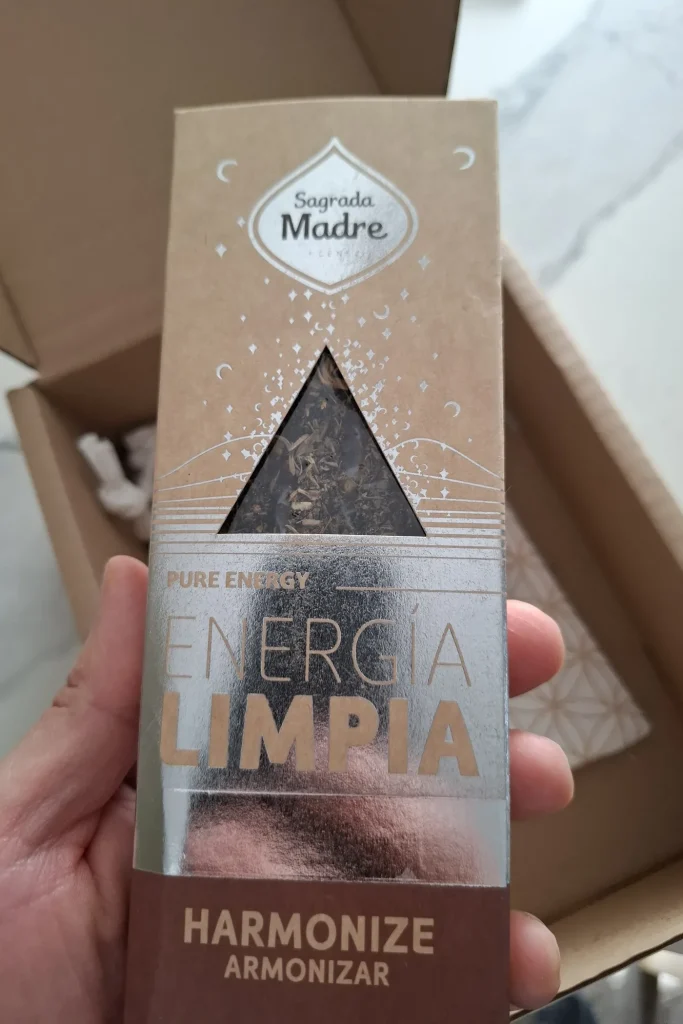
A full cone is rated for around 15 to 20 minutes, which is more smoke than a small room needs. Instead of burning one all the way through, I usually light it for just a few minutes, put it out once the room has enough scent, and relight the same cone next time.
Burning Incense Safely, Whatever the Shape
Every format is a small ember, and the same rules apply to all three.
- Use a holder made for that format and set it on a stable, heatproof surface, away from curtains, paper and anything else that can catch.
- Stay in the room. Never leave incense burning unattended, or while somebody is asleep.
- Ventilate. Burning incense adds fine particles to indoor air, and the US Environmental Protection Agency lists it among the indoor sources of particulate matter, advising proper ventilation before you burn it. Open a window where that won’t blow the ember about, and keep sessions short.
- Put it out completely. Press a stick’s lit end into sand or the ash in the holder until it stops glowing. Put a cone out the same way, or let it burn out in its dish, and check that the base is cold before you walk away.
Greater Manchester Fire and Rescue Service gives the same core advice in its guidance on incense and ceremonial burning.
Skip incense altogether if smoke bothers anyone in the room, or if your building doesn’t allow burning.
Common Questions
Do Cones Smell Stronger Than Sticks?
While they burn, usually yes: the same kind of paste burns faster in a cone, so more scent reaches the room each minute. Over a whole session, the maker and the scent matter at least as much as the shape. If a stick of a scent you like feels too faint, try the cone of the same scent before you change scents.
Can I Burn Half a Stick?
With a coreless stick, yes. Snap it to the length you want and burn that. With a cored stick, the bamboo splint makes snapping harder, so it is easier to put it out early by pressing the tip into sand and relight it another day.
Can I Use a Stick Holder for Cones?
Only if the holder has a flat, heatproof area big enough for the cone’s base. Most narrow wooden stick holders don’t, and a cone burning on wood can scorch it. A small ceramic or metal dish, or a bowl of sand, is the safer choice.
When You’d Rather Not Burn Anything
If smoke isn’t an option in your room, you can still mark the same moment of clearing and fresh intention with sound. A bell, a bowl or your own voice works, and so does a guided session in Crystal Cleanse, our free app, in your browser or on Android. None of them needs a flame, ash or scent, and our sound cleansing guide explains how it works.
* AI was used to assist in the preparation of this article and in the creation and editing of some of its images.