
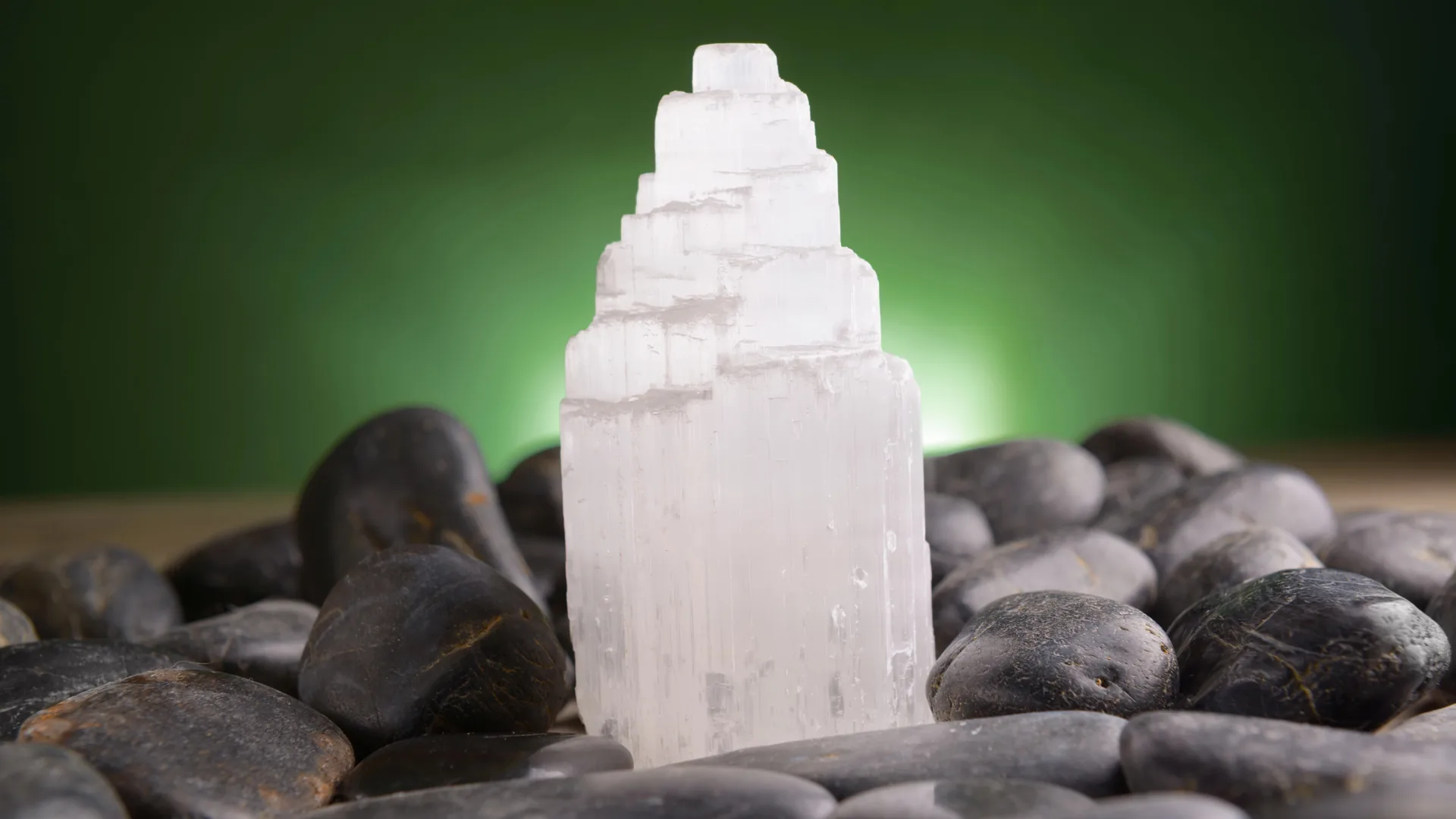

In crystal practice, selenite stands for cleansing, clarity and light. It’s the stone people keep in a room to keep the space feeling clear, and it’s said to clear the crystals around it too. True to its lunar namesake, it is also closely tied to the moon, intuition, and fresh starts.
These meanings come from crystal practice, and the benefits people describe are spiritual ones: a clearer space, a clearer head and a fresh start. Science can tell you what selenite is made of, but not what it stands for, and nothing in this guide is a health claim. We keep the two apart, so you always know whether you’re reading about the mineral or about the tradition.
Selenite’s Properties at a Glance
| Selenite | |
|---|---|
| What it is | A clear crystal form of the mineral gypsum |
| Hardness | 2 on the Mohs scale |
| Name | From selēnē, the Greek word for the moon |
| Main meanings | Cleansing, clarity, light, endings and fresh starts |
| Chakra | Crown, in modern chakra practice |
| Zodiac | Cancer (ruled by the Moon), in modern crystal tradition |
| Care | Keep it dry; water dissolves its surface |
Where Selenite’s Name and History Come From
Selenite gets its name from selēnē, the Greek word for the moon and the name of the Greek moon goddess, Selene. Mineralogists use “selenite” for the clear crystals of gypsum, and the name refers to the soft, whitish reflections on their flat faces. If you have a clear piece, turn it slowly in your hand and you’ll see them.
The link to the moon is old. In the first century AD, Pliny the Elder described a white, transparent stone he called selenitis, “moon stone”, with a figure inside it like the moon that waxed and waned with the moon’s phases – “if what we are told is true,” he added. His nineteenth-century translators thought it was probably our selenite. Nobody can be sure, though, because ancient stone names don’t always match today’s minerals.
Selenite in Roman Windows
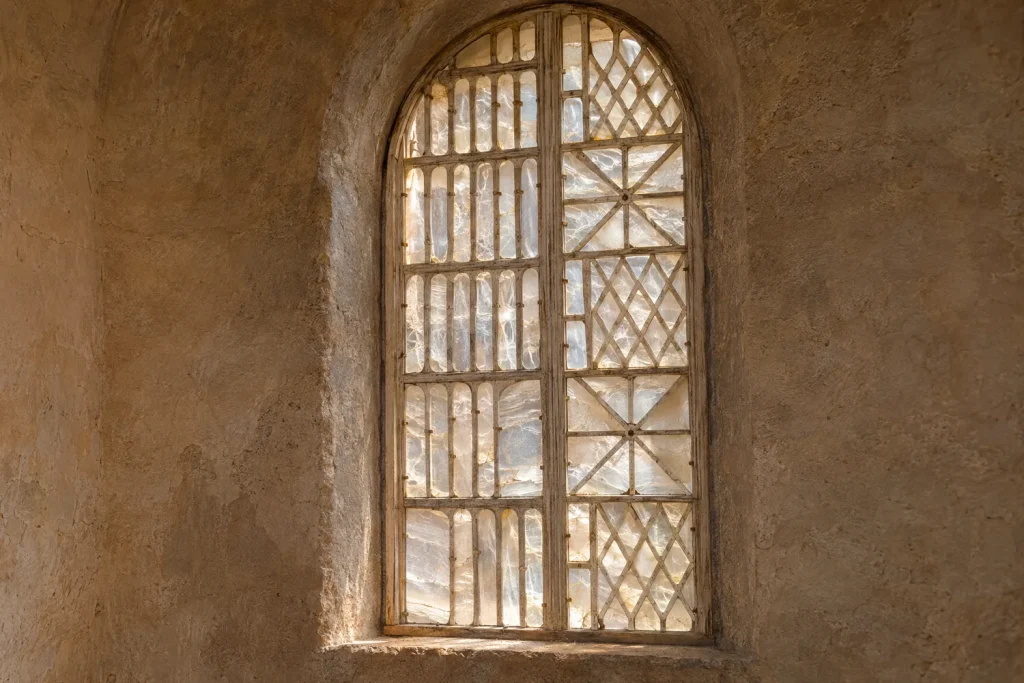
The Romans had a far more practical use for clear gypsum. They called it lapis specularis and split it into thin sheets for windows. Pliny wrote that it could be split into leaves as thin as may be desired, and that the best came from a district around the city of Segóbriga, in Spain. Houses in Pompeii and Herculaneum used Segóbriga’s “glass” in their windows, and some of the old Roman mines can still be visited today.
The Spiritual Meaning of Selenite
Pliny’s moon stone is where the history stops. The meanings below belong to modern crystal practice, and most of them seem to have grown out of how selenite looks: white, with a soft glow along its faces.
Cleansing, Clarity and Protection
Selenite is best known as a cleansing stone. In crystal practice, a piece is kept in a room to keep its energy clear, and it’s said to clear the crystals around it as well. Some people also keep one by the front door as a protective stone for the home.
That’s why selenite is a common choice when you want a clear head or a clean start, for example after a heavy week, when you move into a new home, or when you bring new crystals into the house.
Light and the Crown Chakra
Crystal practitioners sometimes call selenite “liquid light,” a nickname that fits the way light runs along a polished wand. In modern chakra practice, it’s linked with the crown chakra at the top of the head, which stands for your connection to something larger than yourself. Depending on whom you ask, that might be spirit, intuition, or your higher self.
Endings and Fresh Starts
Because of its name, selenite also follows the moon’s cycle in crystal practice. The moon wanes and waxes again every month, so selenite has become a stone for closing one chapter and starting the next, and a favorite for full moon rituals.
That is also why we gave selenite a place in Nightfall, the four-crystal collection from Saluxe – the people behind Crystal Cleanse. There, it represents a quiet exhale: letting go of the day and making room for tomorrow.
Selenite Shapes and What They’re Used For
Selenite is soft and easy to carve, so shops sell it in many shapes. In crystal practice, the shape mostly decides where the stone goes and how you use it:
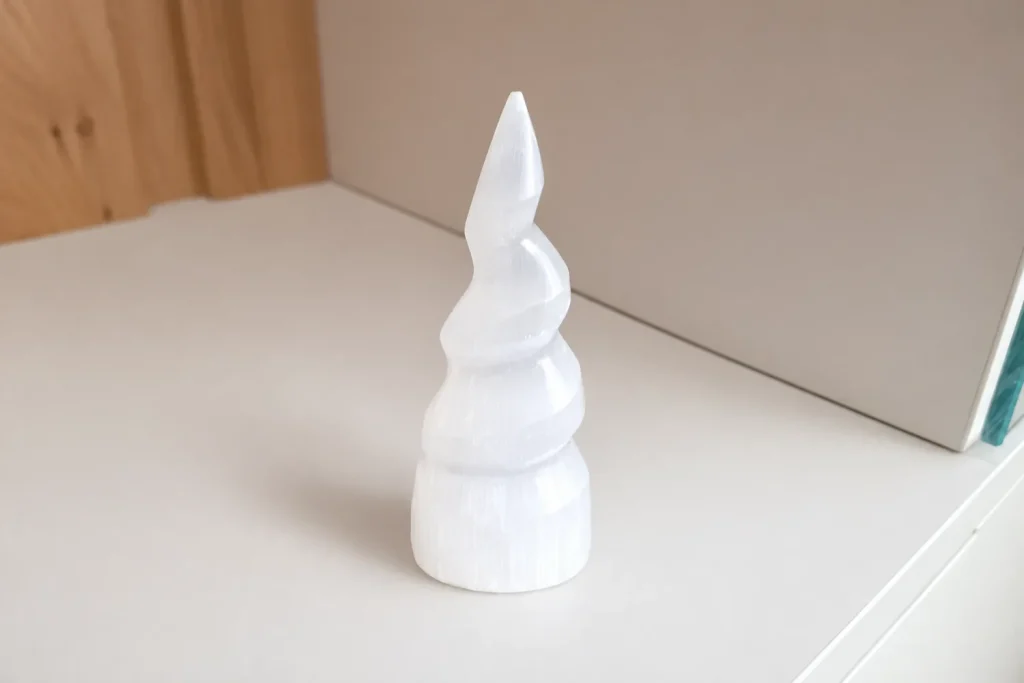
- Wand or stick. Held while you set an intention, or moved slowly around you or another crystal as a cleansing gesture.
- Tower. Stands in a room to keep the space clear, often on a shelf you pass every day.
- Plate or bowl. Smaller crystals rest on it between uses, to be cleansed and recharged.
- Sphere, heart or palm stone. Small enough to hold in your hand while you set an intention or sit quietly for a moment.
- Lamp. A carved block lit from inside, which takes selenite’s meaning of light quite literally. Keep it out of steamy bathrooms and kitchens.
- Bracelet or beads. A way to carry the meaning with you, though soft beads scratch easily (more on wearing selenite below).
Selenite, Satin Spar and Desert Rose: What You’re Actually Buying
Most white wands, towers, bowls and lamps sold as “selenite” are actually satin spar, a fibrous form of the same mineral, gypsum. It’s not a fake: it has the same makeup and the same softness, but it grows in fine parallel fibers with a silky sheen instead of clear sheets. Our selenite cleansing guide explains the difference in more detail.
A desert rose is a rosette of flat crystal blades with sand grains caught inside. It can be gypsum or barite, which is a different mineral, so not every desert rose is a form of selenite.
In crystal practice, satin spar carries the same meanings as clear selenite, and shops sell both under one name.
Orange, Peach and Other Colored Selenite
Gypsum is usually white, colorless or gray, but it can also be yellow, red or brown, and iron minerals such as hematite and goethite can give it those warmer tones. Orange, peach and golden selenite are sold as gypsum colored this way.
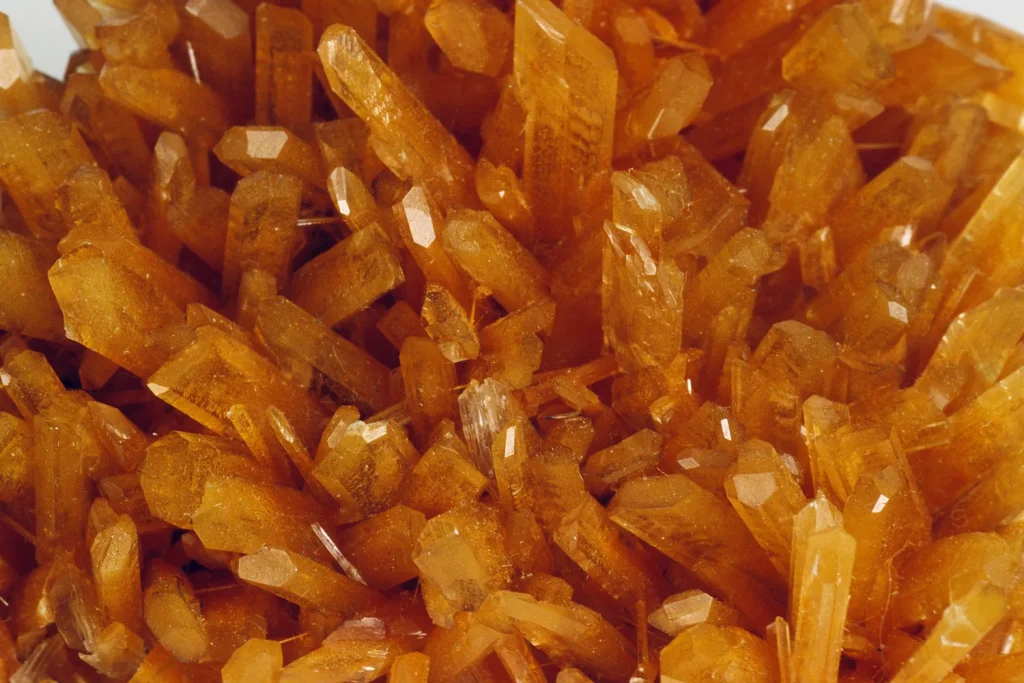
In crystal practice, orange and peach selenite keep selenite’s cleansing meaning and add the warmth of their color: they’re linked with the sacral chakra, creativity, and being gentle with yourself.
Bright blue, pink, purple or black selenite is another matter. Those colors aren’t among gypsum’s usual ones, so ask the seller whether a piece is natural, dyed or coated before you pay extra for it.
Caring for Selenite
Selenite is soft, and water dissolves gypsum at the surface, so keep yours dry: no rinsing, no salt water and no bowls of moon water. It’s often said to cleanse itself, but if you’d like to cleanse it anyway, choose a dry method: sound, smoke, or moonlight indoors. Our guide on how to cleanse selenite walks through each one, along with dusting and what to do if a piece gets wet. For a sound cleanse, the free Crystal Cleanse app (web or mobile) has a selenite session you can play right beside it.
Questions About Selenite
Is Selenite the Same as Moonstone?
No. Both names point to the moon, but moonstone is a feldspar, a different mineral, and its glow comes from light scattering between thin layers inside the stone. Selenite is gypsum, and its sheen comes from its flat crystal faces or, in satin spar, from its fibers.
What Does It Mean When Selenite Breaks?
In crystal practice, a crystal that breaks is often said to have finished its work, or to have taken on more than it could hold. You can keep the pieces and go on using them, or let them go, whichever feels right to you.
There’s a plain physical reason too. Gypsum splits easily in one direction, which mineralogists call cleavage, and thin crystals bend without springing back. Combined with its softness, that means a dropped or knocked piece breaks more easily than most crystals on your shelf.
Is Selenite Rare?
No. Gypsum is one of the more common minerals in sedimentary rocks, so selenite and satin spar are easy to find in crystal shops.
Can You Wear Selenite?
You can, but gypsum is soft enough to scratch with a fingernail. A pendant will hold up better than a ring or bracelet that knocks against things every day. Take it off before you wash your hands, shower, or swim.
* AI was used to assist in the preparation of this article and in the creation and editing of some of its images.